Delhia Embroidery Font: A Designer’s Practical Review
As a professional embroidery designer and product reviewer, I approach every new machine embroidery design with a healthy dose of skepticism. The market is saturated with fonts that look beautiful on screen but fail catastrophically under the needle. When evaluating the Delhia Embroidery Font, my primary concern was not just its aesthetic elegance, but its structural integrity in real-world production. This font promises a blend of sophistication and creativity, positioning itself as a versatile asset for everything from Back To School personalization to high-end boutique branding. After testing it across various substrates and project types, here is my honest assessment of how Delhia performs when thread actually hits fabric.
First Impressions: Balancing Elegance with Stitch Integrity
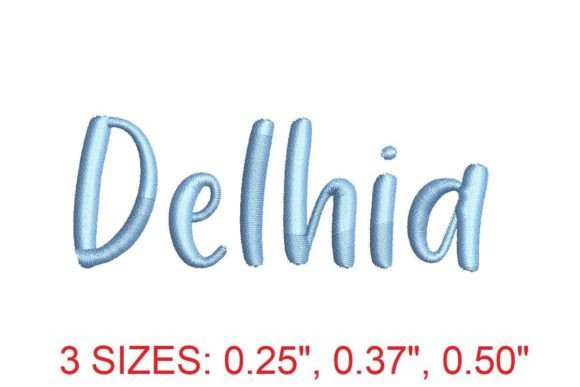
Upon loading the digital embroidery file into my digitizing software, the first thing I noticed about Delhia was its balanced stroke width. Many "elegant" fonts suffer from satin columns that are either too narrow (risking thread breaks) or too wide (causing puckering). Delhia appears to hit a sweet spot. The letterforms possess a refined serif structure that feels traditional yet fresh, avoiding the overly ornate swirls that often cause registration issues on stretchy fabrics.
The visual personality of this font suggests versatility. It does not scream "nursery" or "formal wear" exclusively; instead, it occupies a sophisticated middle ground. For an Etsy seller or small shop product creator, this is crucial. You need assets that can transition from a personalized baby blanket to a custom apron without looking out of place. The spacing (kerning) is generous enough to prevent stitches from merging at smaller sizes, which is a common failure point in decorative typography.
Real-World Test: Custom Sweatshirt Production
To truly evaluate this embroidery project asset, I moved beyond the screen and set up a production run for a client requesting custom crewneck sweatshirts. Fleece and French terry are notoriously difficult because their texture can swallow fine details. I used Delhia to stitch a collegiate-style name across the chest of a heavyweight cotton fleece.
The results were impressive. Because the font utilizes a well-planned satin stitch path, the letters sat cleanly on top of the fabric pile rather than sinking in. I paired it with a medium-weight cutaway stabilizer and a ballpoint needle to prevent fabric damage. The stitching clarity remained high even after the garment was washed and dried. For custom apparel businesses, this reliability is paramount. Customers judge quality by how crisp the text looks after three washes, not just when it comes out of the hoop. Delhia maintained its legibility and shape, validating its use for commercial-grade merchandise.
Ideal Applications for Makers and Sellers
Based on my testing, Delhia excels in specific categories where readability meets style. If you are curating your inventory of design assets, consider this font for:
- Tote Bag Design: The font’s weight holds up beautifully on canvas and linen. It provides excellent contrast against natural fibers, making it ideal for eco-friendly shopping bags or library totes.
- Baby Embroidery: While elegant, it lacks sharp, dangerous points, making it safe and soft for nursery decor, bibs, and receiving blankets. It elevates a simple personalized gift above standard block lettering.
- Holiday Embroidery: The classic serifs pair exceptionally well with metallic threads for Christmas stockings or festive pillow covers without looking dated.
- Craft Business Branding: For makers selling at markets, using Delhia for uniform tags, packaging ribbons, or branded aprons creates a cohesive, professional visual identity.
For those creating printable mockups for digital listings, the font photographs well. Its clean lines translate accurately from digital preview to finished product, reducing customer disputes over "item not as described."
Technical Limitations and Cautionary Zones
No embroidery file is perfect for every scenario. During my review, I identified specific situations where Delhia requires careful handling or should be avoided entirely.
Small Hoop Sizes and Tiny Text
While the kerning is good, Delhia is fundamentally a decorative font. Attempting to shrink it below 0.5 inches in height compromises the internal details of the serifs. On small items like pocket logos or sleeve cuffs, the stitch density becomes too high, leading to stiff, bulletproof patches of thread. For tiny text, stick to simpler sans-serif options and reserve Delhia for larger focal points.
Highly Textured or Stretchy Fabrics
Although it performed well on fleece, highly textured terry cloth or loose-knit sweaters pose a challenge. The elegant thin-to-thick transitions can get lost in deep fabric valleys. If you must use Delhia on these surfaces, increase your topping usage significantly. Similarly, on high-stretch performance wear, the rigid nature of the satin stitches may restrict fabric movement. Always test on a scrap of the exact fabric texture before committing to a full production run.
Curved Surfaces and Caps
Embroidering on caps introduces distortion due to the curved surface. Delhia’s horizontal crossbars can appear slanted if not compensated for during digitizing or hooping. While usable for embroidered patch applications that are later sewn onto a cap, direct-to-cap embroidery requires advanced stabilization and potentially manual letter-spacing adjustments to maintain visual balance.
Professional Notes for Commercial Success
Integrating Delhia into your commercial embroidery workflow requires diligence. Whether you are a hobbyist upgrading your skills or an established apparel decorator, follow these practical guidelines to ensure success:
- Verify Licensing: Before listing any handmade product featuring this font, confirm the specific license terms included with your purchase. Ensure you have the rights to sell finished goods versus digital files.
- Thread Color Contrast: This font relies on line quality. Low-contrast combinations (e.g., navy thread on black fabric) will obscure the elegant details. Use high-contrast thread colors to maximize visual appeal.
- Stabilizer Matching: Do not rely solely on tear-away backing for woven fabrics if the design is dense. A combination of cutaway and water-soluble topping often yields the crispest edges for serif fonts.
- Mockup Accuracy: When creating listings for Etsy sellers or boutique sites, avoid distorting the font in Photoshop to fit a curve. Show the design as it will actually stitch to build buyer trust.
- Test Before Selling: Never assume a digital embroidery file is production-ready straight out of the box. Run a sew-out on your target material to check for pull compensation issues specific to your machine tension.
Final Verdict for Embroidery Entrepreneurs
The Delhia Embroidery Font earns its place in a professional digitizer’s toolkit. It successfully bridges the gap between ornamental beauty and functional durability. For Back To School seasons, it offers a more mature alternative to bubble letters for teen apparel. For wedding and gift markets, it provides the necessary sophistication without excessive complexity.
However, its value lies in correct application. It is not a universal solution for micro-text or extreme stretch fabrics. But for mid-to-large scale projects on stable to semi-stable substrates—totes, sweatshirts, home decor, and patches—it delivers consistent, sellable results. By respecting its technical boundaries and leveraging its aesthetic strengths, makers can confidently use Delhia to elevate their product offerings and justify premium pricing through superior craftsmanship. Always remember that the best embroidery design is one that survives the washing machine as gracefully as it emerges from the hoop.